
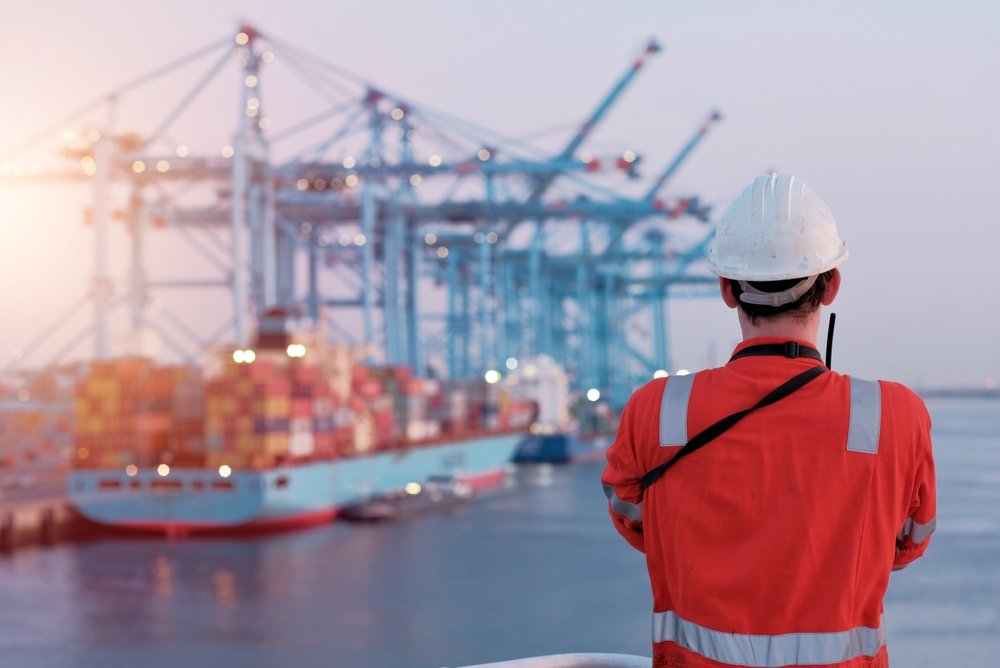
Maritime & Dockers
Shipping – Transporting the World’s Goods
Shipping transports 90% of global trade across the world. That is some 11 billion tons of goods are transported by ship each year. Shipping’s capacity to transport goods and materials from where they are produced to where they are consumed is a feature of modern life.
At the forefront of the regulation of shipping is the International Maritime Organization, an agency of the United Nations.
"The mission of the International Maritime Organization (IMO) as a United Nations specialized agency is to promote safe, secure, environmentally sound, efficient and sustainable shipping through cooperation. This will be accomplished by adopting the highest practicable standards of maritime safety and security, efficiency of navigation and prevention and control of pollution from ships, as well as through consideration of the related legal matters and effective implementation of IMO’s instruments with a view to their universal and uniform application."
The International Labour Organization (ILO), the only tripartite United Nations agency that brings together governments, employers and workers representatives, also plays a key role in the setting of standards for the world’s seafarers. The ILO is devoted to promoting social justice and internationally recognized human and labour rights, pursuing its founding mission that social justice is essential to universal and lasting peace.

Just Transition and Sustainability Transforming Maritime
The IMO’s decarbonisation goals have led to an industry-wide transition to vessels powered by greener fuels (e.g., ammonia, hydrogen, biofuels), requiring new training and certifications for maritime workers. Seafarers may face hazards from these new fuel technologies, including ammonia toxicity and LNG explosion risks. Automation, AI, and emissions regulations could reduce traditional seafarer roles or demand new skill sets.
Efforts are underway by organisations such as the IMO and ILO to address regulations and push for stronger safety, wage, and environmental standards. The Maritime Just Transition Task Force (MJTTF), for example, is establishing new standards for training materials and certifications related to working with alternative fuels. A comprehensive review of the STCW is also in progress, to align seafarer training, certification, and watchkeeping with evolving trends in the shipping industry, including green skills training. The latest amendments to the MLC, in effect as of the end of 2024, address numerous aspects of improved working conditions.

Low Wages, Mental Health Impacting Seafarers
Among the most important issues affecting seafarers are wages exploitation, especially for workers from developing nations, work under low-wage contracts, often below fair living standards. COVID-19 exposed how seafarers could be trapped at sea beyond contracts due to travel bans, leading to mental health crises and burnout; today’s geopolitical conflicts and piracy situations are having a similarly damaging effect on seafarer mental health. Some shipowners abandon crews in foreign ports without wages, relying on charities or slow legal processes for repatriation.
“Quote goes here.”
Abandonment and Criminalisation: Cruel yet Increasingly Common
Seafarers are highly vulnerable to unjust abandonment and criminalisation due to weak legal protections, lack of international enforcement, and the complexities of maritime jurisdiction. These issues severely impact their financial security, mental health, and career prospects. According to the IMO and ILO, these practices are increasing. A recent example, as yet unresolved, involves the March 2025 North Sea collision of the container ship MV Solong and the oil tanker MV Stena Immaculate, resulting in crew member death and environmental damage; within days of the collision, the Russian captain of the Solong was arrested and charged with gross negligence manslaughter. The IMO, ILO, and ITF advocate for seafarers in these situations; in particular, The Fair Treatment of Seafarers in the Event of a Maritime Accident is a set of IMO/ILO Guidelines that aims to prevent unjust prosecution.
Both abandonment and criminalisation expose the lack of legal protection for seafarers, making them one of the most vulnerable workforces in the global supply chain. Stronger enforcement of international laws and better union representation are key to protecting seafarers from exploitation.
Challenges Abound for Seafarers Seeking Fair Treatment
Many maritime workers lack strong collective bargaining rights, making it hard to negotiate better conditions. Many ships operate under flags from countries with weak labour protections, undermining fair pay and safety standards. Women and minority workers face discrimination, harassment, and limited career advancement opportunities. There are fair shipping initiatives such as ethical shipping certifications and port-state controls that aim to hold exploitative operators accountable but more can be done.

Multiple amendments to the Code of the Maritime Labour Convention, 2006 (MLC, 2006) came into force on 23 December 2024, designed to ensure better conditions for maritime workers. As detailed by the ILO, the new amendments include:1. Recruitment and placement: Seafarers are informed, prior to or in the process of engagement, of their rights under the system of financial protection to be established by private recruitment and placement agencies to compensate seafarers for monetary losses.2. Repatriation: Member States facilitate the prompt repatriation of abandoned seafarers and cooperate to ensure that seafarers engaged to replace seafarers who have been abandoned in their territory, or on a ship flying their flag, shall be accorded their rights and entitlements under the MLC, 2006.3. Accommodation and recreational facilities/Access to shore-based welfare facilities: Seafarers are provided with appropriate social connectivity on board; shipowners, so far as is reasonably practicable, provide seafarers on board their ships with internet access with charges, if any, being reasonable in amount. Port States do the same for seafarers on board ships in their ports and at their associated anchorages. 4. Food and catering: Good quality drinking water is available free of charge for seafarers; meals provided are balanced; supplies of food and drinking water are inspected in relation to their quantity, quality, nutritional value, quality and variety.5. Medical care on board ship and ashore: Seafarers are promptly disembarked when they are in need of immediate medical care and are given access to medical facilities ashore in cases of, among others, any serious injury or disease, any injury involving broken bones, severe bleeding, broken or inflamed teeth or severe burns; severe pain which cannot be managed on board ship and suicide risk. Member States facilitate the repatriation by the shipowner of the body or ashes of seafarers who have died on board. 6. Health and safety protection and accident prevention: Seafarers have appropriately-sized personal protective equipment, in particular to suit the increasing number of women seafarers; all deaths of seafarers are recorded and reported annually to the ILO and the relevant data is published.7. Financial security: The documentary evidence of financial security includes the name of the registered owner if different from the shipowner.Source: International Labour Organization, https://www.ilo.org/resource/news/new-important-set-amendments-mlc-2006-will-enter-force-23-december-2024Spotlight: Latest MLC Amendments to Working Conditions for Seafarers
Case Study:
Just Transition for Maritime Transport Workers in the Shift
to Alternative Fuels
The International Maritime Organization (IMO) has set a net-zero emissions target by 2050, requiring the rapid introduction of alternative fuels in global shipping. However, the maritime workforce lacks training in handling new fuels, raising serious safety and job security concerns. Without proper retraining programs, thousands of seafarers risk displacement or reduced employability in the industry. Factors of concern include:
· High-risk fuels (e.g., ammonia, hydrogen) are highly hazardous due to toxicity, flammability, and explosion risks, thereby requiring new safety procedures, firefighting methods, emergency response, and engineering protocols.
· Older ships using traditional fuels will be phased out, potentially eliminating jobs for workers who cannot transition.
· Developing nations, which supply 80% of the world’s seafarers, lack training centers and regulatory frameworks for alternative fuel education. Without global access to training, workers from low-income countries risk being excluded from future maritime jobs.
To address these challenges, the IMO Secretariat, along with the International Chamber of Shipping (ICS), the International Transport Workers’ Federation (ITF), the United Nations Global Compact and the International Labour Organization (ILO) launched the Maritime Just Transition Task Force, the first global sectoral task force dedicated to a just transition.
MJTTF goals are to develop training materials, establish new competency standards, and ensure global accessibility for the maritime workforce. With participation from stakeholders throughout the maritime sector, MJTTF is currently working toward these goals. The IMO's Sub-Committee on Human Element, Training and Watchkeeping (HTW) have agreed draft interim guidelines for training seafarers working on ships powered by alternative fuels, which has paved the way for maritime educators and training providers to work to a common approved set of standards. At the same time, there is a comprehensive review in progress of the STCW Convention, which will also help inform training standards for maritime’s green future.
The longterm benefits of the MJTTF include the global standardisation of zero-emission fuel operations in shipping; increased employability for seafarers trained in next-generation maritime technology; and a safer, fairer, and more sustainable maritime workforce.
The transition to alternative fuels is critical for decarbonizing shipping, but it must be worker-centric to ensure fair treatment of seafarers. Through targeted training, updated certification standards, and global accessibility, the Maritime Just Transition Task Force is leading a proactive approach to protect workers’ rights in the green transition.