
International Symposium Explores the Future of Maritime Casualty Investigations and Seafarers' Rights
15/07/2026
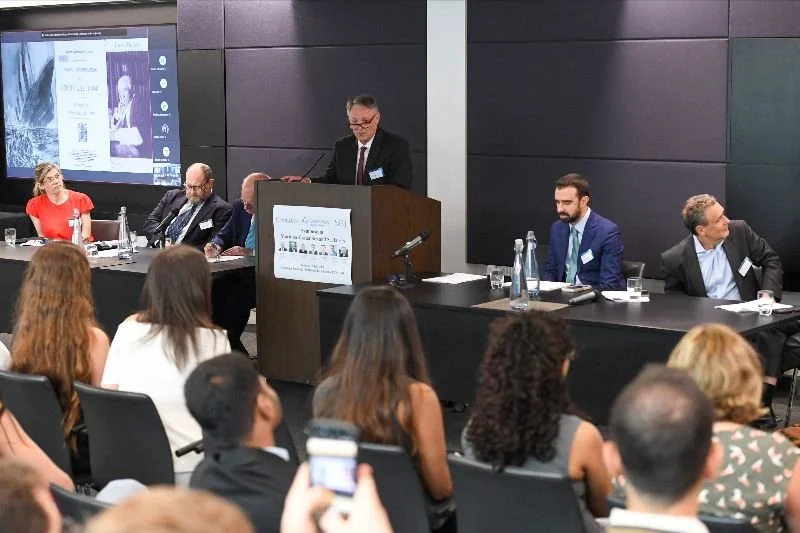
Seafarers’ Rights International (SRI) has hosted a high-level symposium on Maritime Casualties and Seafarers, together with Clyde & Co international law firm and Queen Mary University of London.
Chaired by Sir Nigel Teare, former Admiralty Judge in the High Court of England and Wales and an International Judge to the Supreme Court of Singapore, with speakers from Clyde & Co, Quadrant Chambers and Queen Mary University of London, the symposium traced the history of maritime casualties from the catastrophic loss of the “Titanic” to the present day, and covered a wide range of legal and practical challenges that continue to exist around the investigation of maritime casualties.
Professor Hilton Staniland, Honorary Professor at Queen Mary University and CEO of SRI said: “Maritime casualties are a major and continuing concern of the maritime industry. And the geopolitical risks and conflicts are increasing the potential for maritime losses. The consequences of maritime casualties have historically raised challenging legal issues, and this continues to be the case in a maritime industry that is changing faster than ever before. The attention of the legal and academic communities is critical for the development of the legal and practical consequences of maritime casualties.”
Also in attendance were two members of the SRI Advisory Board who also addressed the audience: Rear-Admiral (Maritime Affairs) Jean-Marc Schindler, former Head of the Marine Accident Investigation Office, France (BEAmer) and Captain Kuba Szymanski, Secretary General of the International Association of Ship Managers (InterManager).
One of the issues discussed at the symposium is the real risk of evidence from an investigation under the SOLAS Casualty Investigation Code being used against seafarers in criminal prosecutions. Evidence may be requested by States or third parties from an investigation under the Code, and the evidence might be used for a criminal prosecution. A world-wide survey of over 3,000 seafarers conducted by SRI showed that almost 50% of those seafarers were reluctant to participate in casualty investigations for fear of incrimination. But seafarers are frequently obliged under national laws to answer questions.
Professor Staniland added: “There have been positive developments regarding the fair treatment of seafarers with the recently adopted amendments to the Maritime Labour Convention (MLC) giving effect to the Guidelines jointly produced by International Labour Organisation and International Maritime Organisation on the fair treatment of seafarers following maritime accidents or in connection with alleged maritime crimes. But ratification of the MLC by itself is not enough. Implementation in national laws and enforcement in courts around the world by practising lawyers should give teeth to Guidelines. The Guidelines will then begin to bite down on unfair treatment”.
He continued: “There are many challenges ahead for casualty investigations and seafarers. They include: maritime autonomous surface ships (MASS); artificial intelligence (AI); cyber security risks; and geopolitics, which is fast becoming a factor in marine casualty investigations because casualties may occur in environments shaped by sanctions, armed conflict, strategic competition, and contested maritime claims. The subject of maritime casualties will remain highly prominent in the years ahead; and is likely to change faster than ever before.”